🎁 Up to 40% OFF When You BUY IN BULK! ALL ORDERS MADE AND SOURCED IN USA! 🇺🇸

What's Really Happening Inside Your Dog's Joints
(And Why Most Solutions Can't Fix It)
By the end of this article, you'll understand canine joint health better than most veterinarians—and know exactly why your dog has good days and bad days.
May 08, 2023 | BY FAITH S.
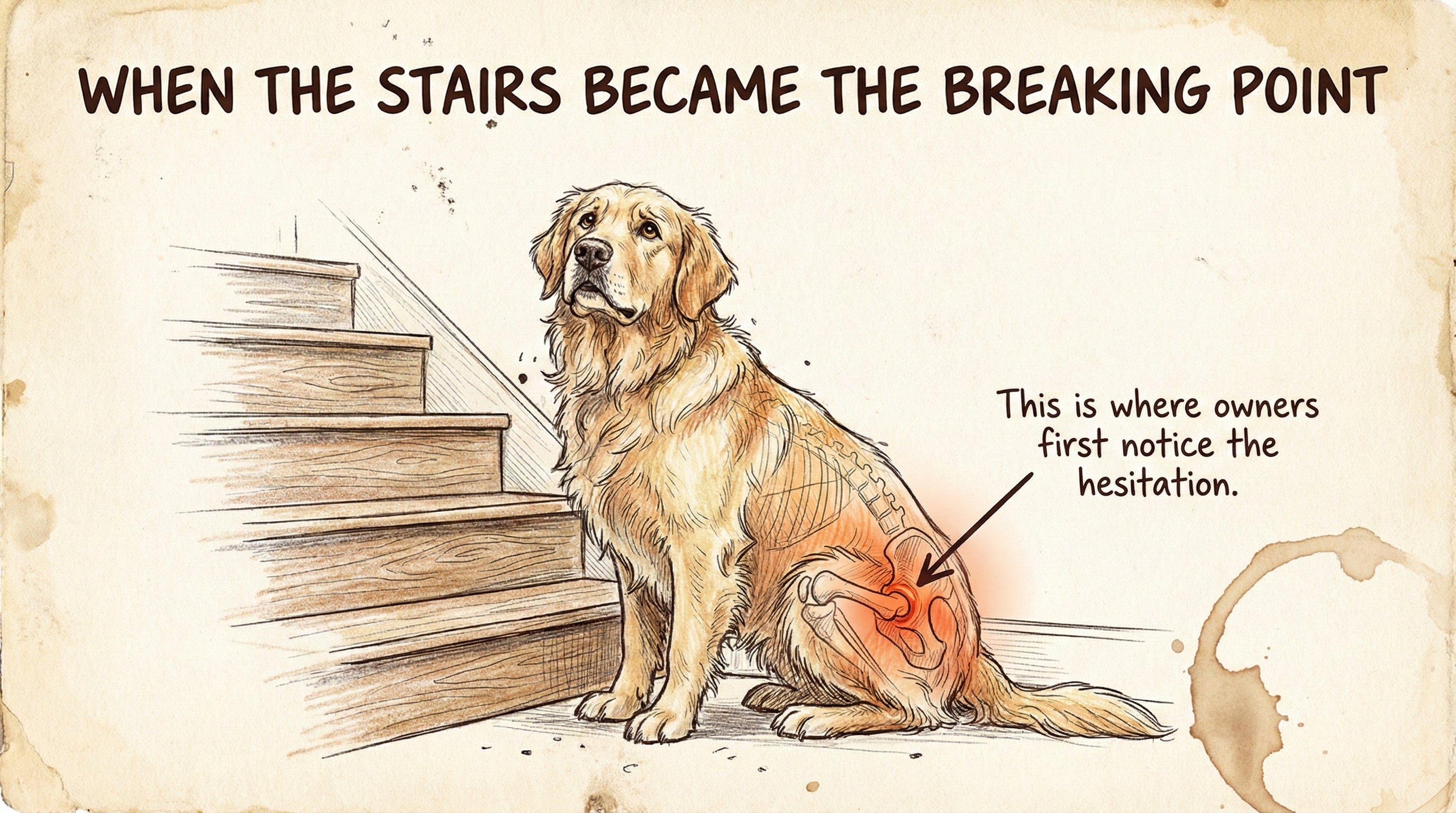
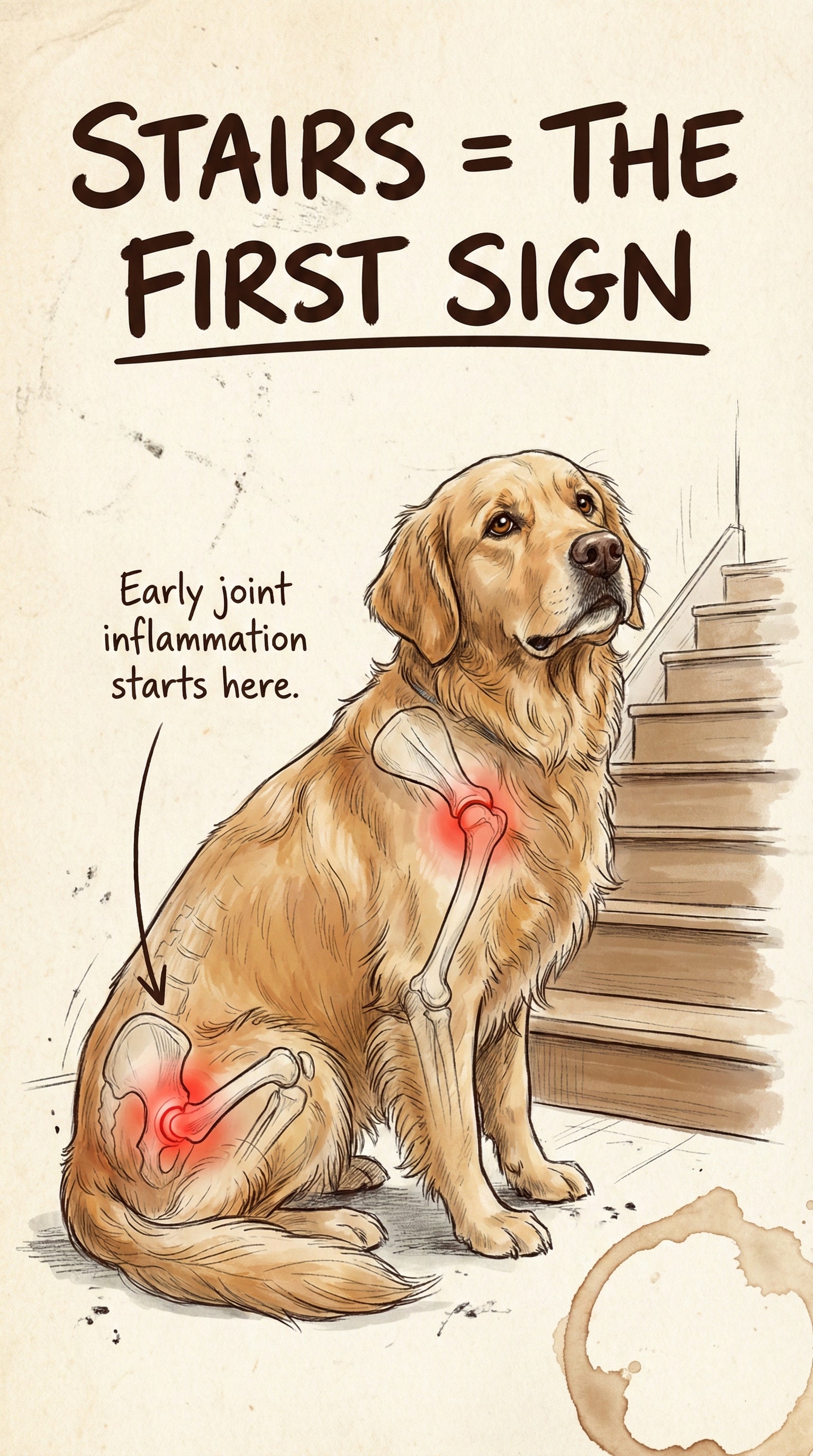
If your dog hesitates at the bottom of stairs, groans when getting up from bed, or has days where they just can't seem to get comfortable, you've probably been told the same thing I was: "It's just age. Give them glucosamine."
Here's what I learned after spending six months researching canine joint health, interviewing veterinary researchers, and digging into clinical studies that most vets never read: That's not the whole story. Not even close.
By the time you finish this article, you'll understand exactly what's happening inside your dog's joints, why every solution you've considered has serious downsides, and what actually works for dogs showing early-to-moderate joint issues.
This isn't a sales pitch. It's an anatomy lesson that could change your dog's quality of life.
THE ANATOMY LESSON: WHAT'S ACTUALLY IN THERE
To understand why your dog has good days and bad days, you need to understand what's happening at the cellular level.
The Healthy Joint (Ages 4-6):
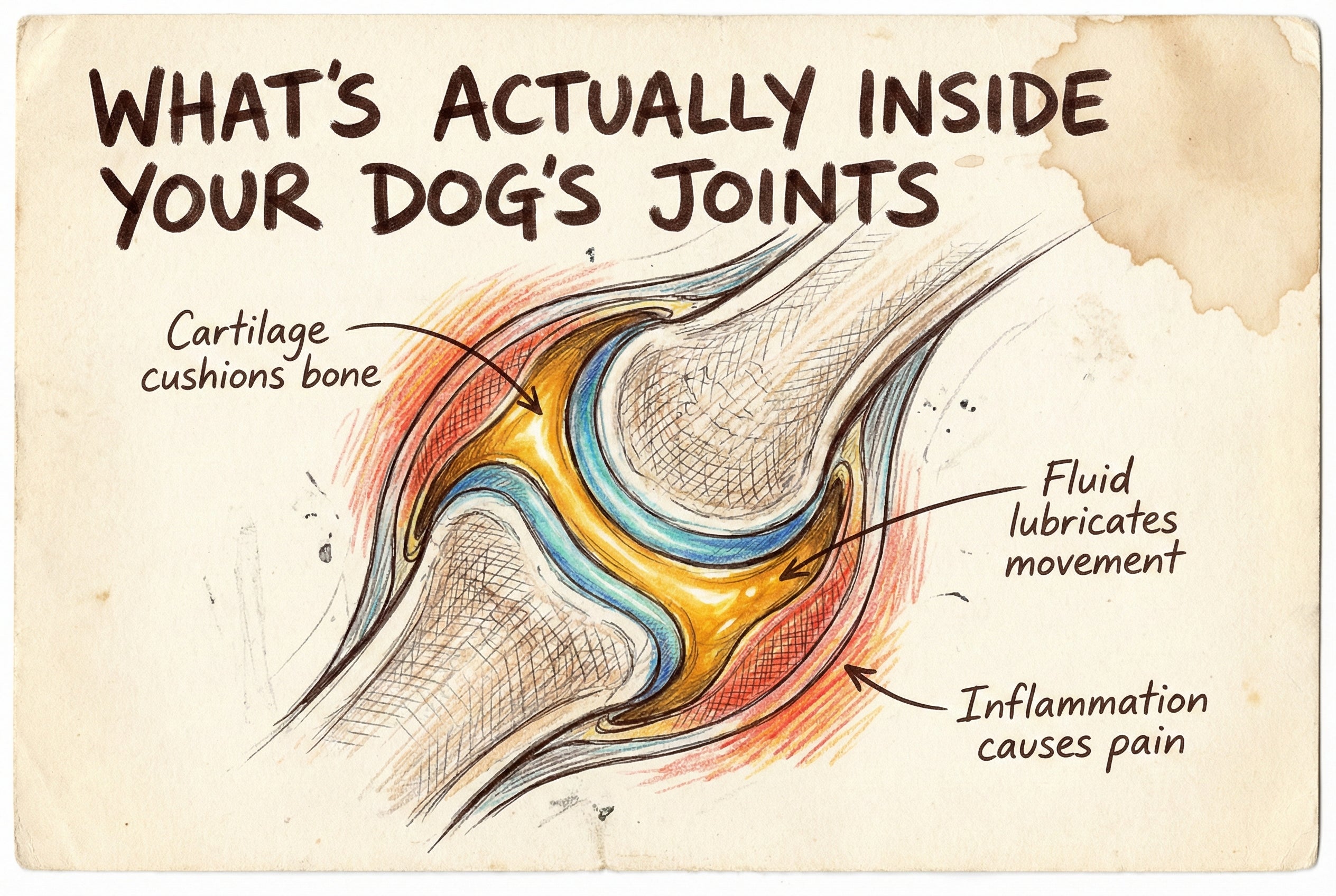
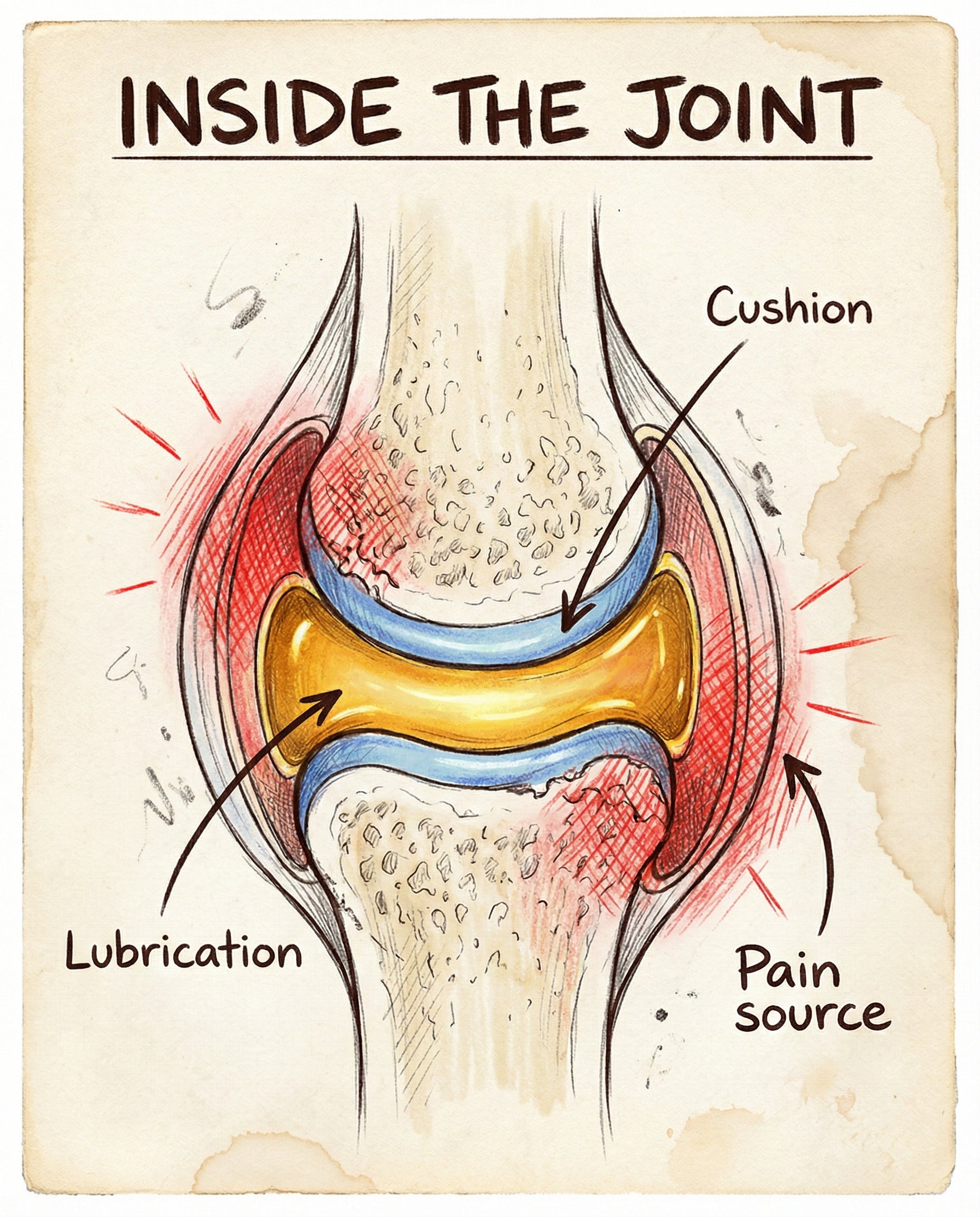
Inside your dog's hip or knee, there's a remarkable system. Cartilage—a smooth, rubbery tissue—coats the ends of bones, acting like a shock absorber. Synovial fluid—a thick, golden lubricant—fills the joint capsule, allowing bones to glide past each other without friction. Chondrocytes—specialized cells—constantly repair and rebuild cartilage as your dog runs, jumps, and plays.
When everything works, your dog doesn't think about their joints. They just move.
The Early Decline (Ages 7-9):
Around age 7—earlier for large breeds like German Shepherds and Labs—something changes. Inflammation begins creeping into the joint capsule. It's subtle at first. The synovial fluid thickens slightly. The cartilage doesn't repair as quickly. Your dog might hesitate for a split second before jumping in the car. They might take an extra circle before lying down.
This is Stage 2 joint decline. Your dog is still eating, still wagging, still trying to play. But inflammation is building.
The Breaking Point (Ages 10+ without intervention):
If inflammation continues unchecked, cartilage breaks down faster than it can repair. Synovial fluid loses its lubricating properties. Bones start grinding against each other. Your dog develops the "morning groan." Stairs become intimidating. Play sessions end in limping.
By the time you see obvious limping, significant cartilage is already gone. Cartilage doesn't grow back.
THE MYSTERY SOLVED: WHY GOOD DAYS AND BAD DAYS?
So why does your dog have good days and bad days? Why can they run in the yard on Tuesday but struggle with stairs on Wednesday?
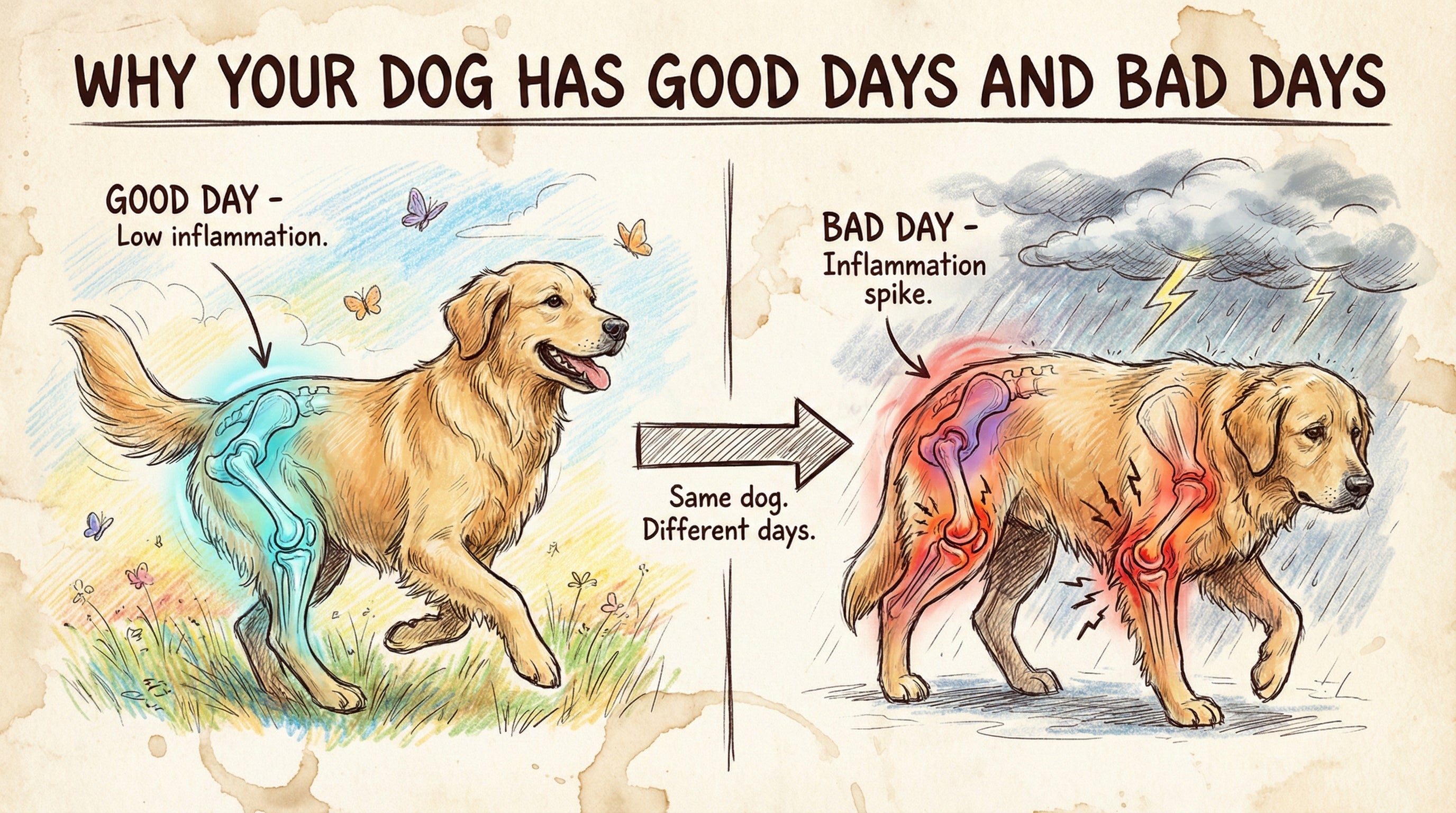
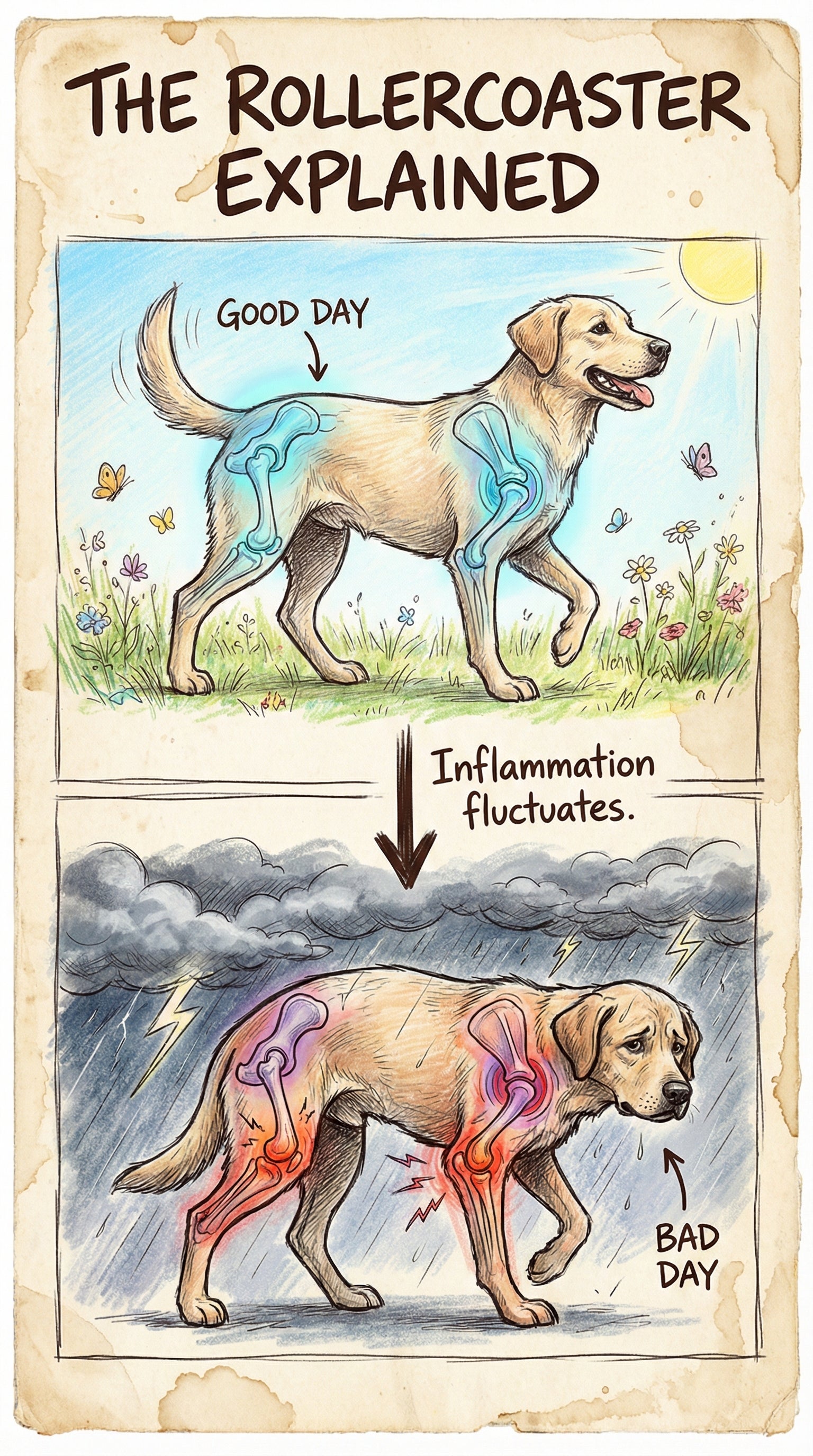
Inflammation fluctuates.
Some days, your dog's natural anti-inflammatory compounds are higher. The synovial fluid is thinner. Movement is easier. That's a "good day."
Other days—after activity, during weather changes, or for no apparent reason—inflammation spikes. The fluid thickens. Cartilage compression hurts. That's a "bad day."
Here's the critical part: Every bad day means more cartilage breakdown. The rollercoaster isn't just uncomfortable—it's accelerating joint damage.
Most owners think they're waiting for their dog to "get used to" aging. Actually, they're watching inflammation destroy cartilage in real-time.
THE BRUTAL TRUTH: YOUR OPTIONS AREN'T GREAT
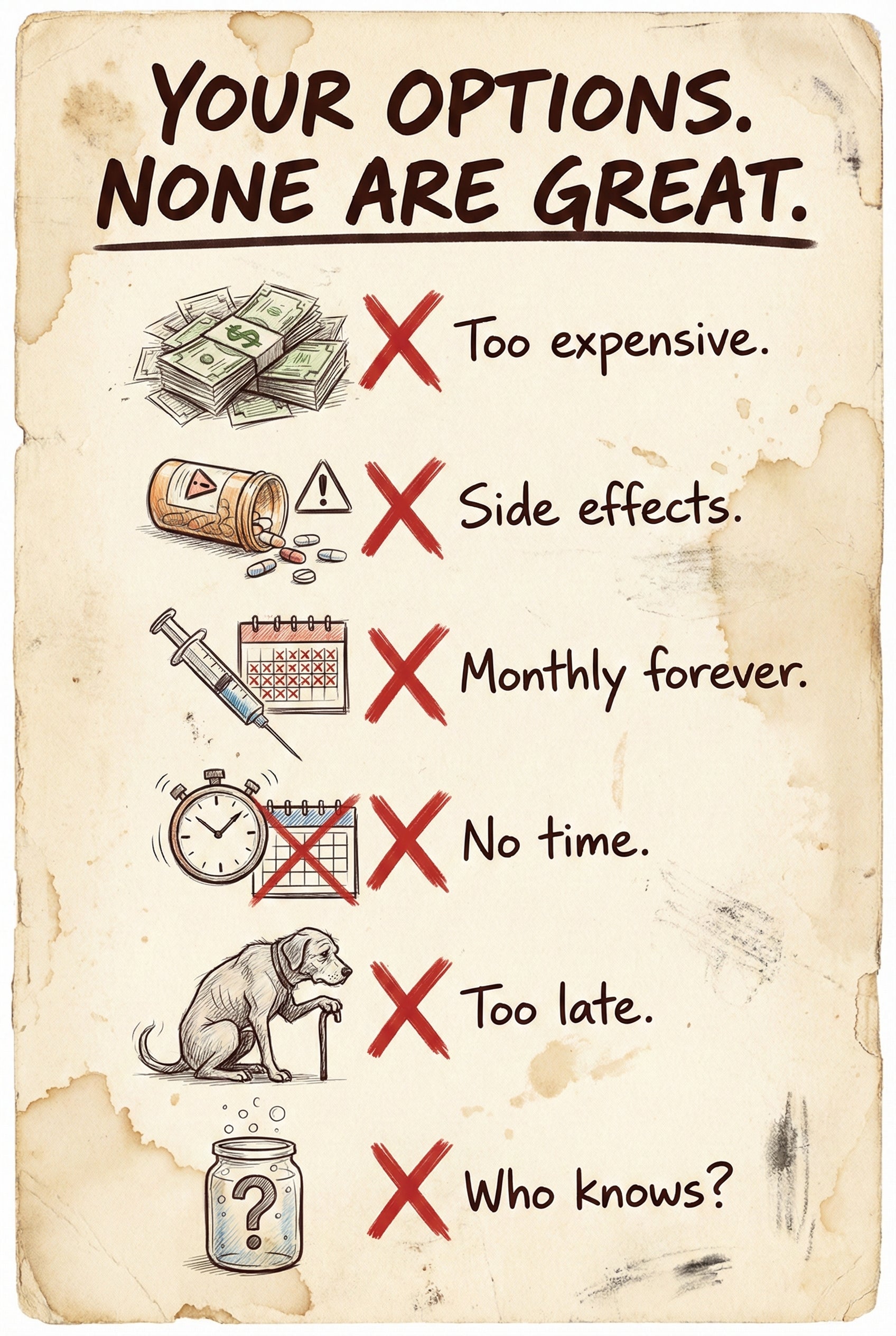
When your dog starts showing joint issues, you're faced with a menu of imperfect choices.
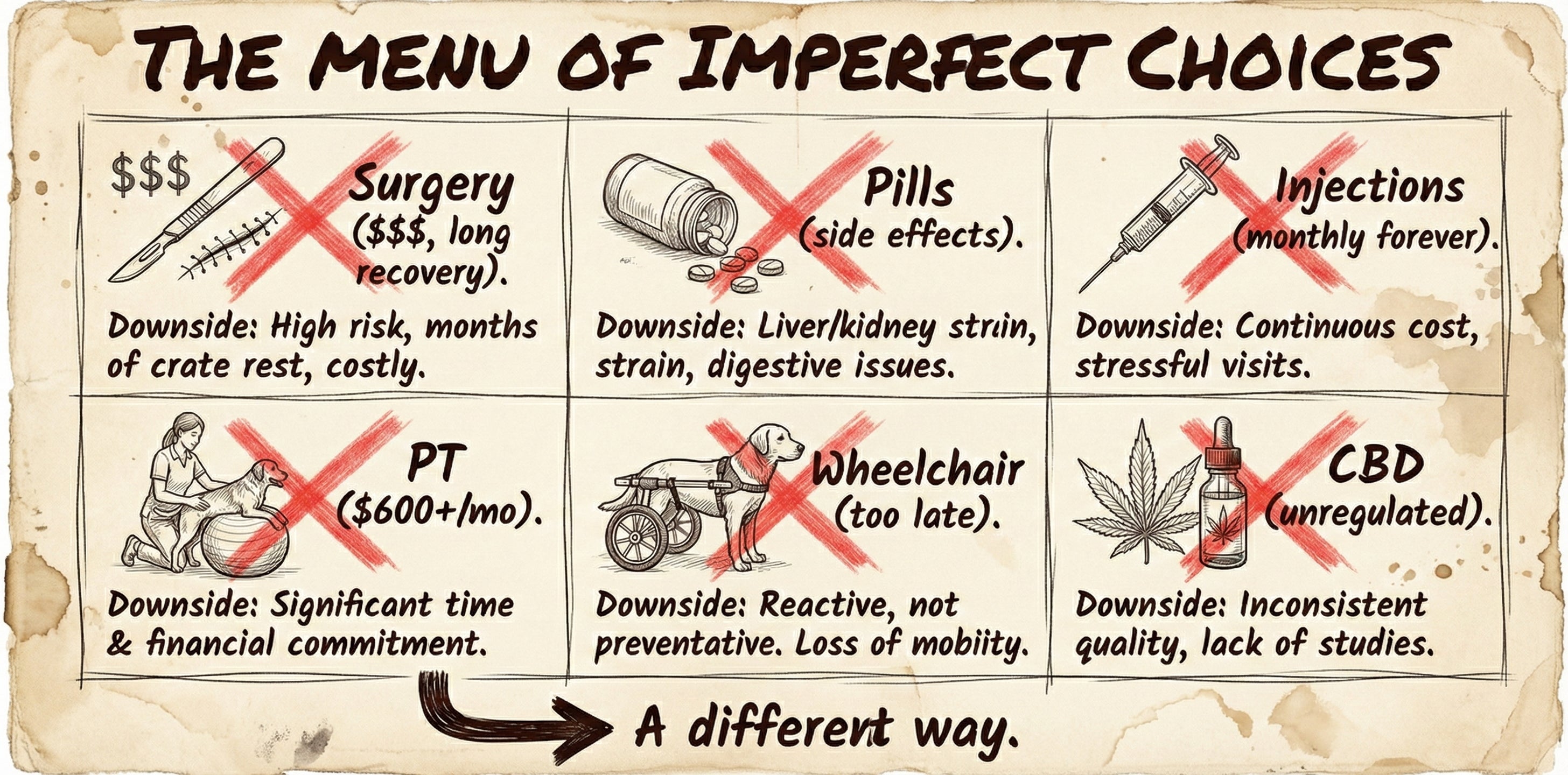
Surgery: Total hip replacement runs $3,500-$7,000 per hip. Recovery is 8-12 weeks of restricted activity. For many dogs, especially seniors, anesthesia risk is real. And surgery doesn't address inflammation—it replaces the joint after damage is done.
Prescription NSAIDs: Galliprant, Rimadyl, Deramaxx. These help with pain and inflammation, but come with liver and kidney side effects. Bloodwork every 6 months. $80-150/month indefinitely. Many owners report their dogs become lethargic or lose appetite.
Injections: Adequan requires loading doses—two injections per week for 4 weeks, then monthly maintenance. $65-125 per injection. Librela is newer but requires vet administration every month at $100-200 per dose. Monthly vet visits. Forever.
Physical Therapy: Hydrotherapy, laser therapy, acupuncture. $75-150 per session. Multiple sessions per week. Most owners can't sustain $600-1,000/month indefinitely.
Dog Wheelchairs: By the time you're here, you're managing disability, not preventing it. Wheelchairs help mobility but don't stop pain. And many dogs never fully adapt mentally.
CBD and "Natural" Remedies: The Wild West. No regulation, inconsistent dosing, questionable sourcing. Some dogs respond. Many don't.
Glucosamine: The standard recommendation for 30 years. Works for some dogs, does nothing for many, takes 3-6 months to evaluate. By the time you realize it's not helping, you've lost half a year.
Doing Nothing: "It's just age." Except it's not. It's progressive cartilage destruction. Every month of "just watching" means less cartilage left to save.
Here's what frustrated me: Every option was either reactive (wait until damage is severe) or incomplete (address one aspect while ignoring others).
I wanted something proactive for Stage 2 dogs—before surgery, before wheelchairs, before prescription side effects. Something that addressed inflammation, cartilage repair, and lubrication simultaneously.
That didn't exist. So we made it.
THE SCIENCE: 11 PATHWAYS TO JOINT HEALTH
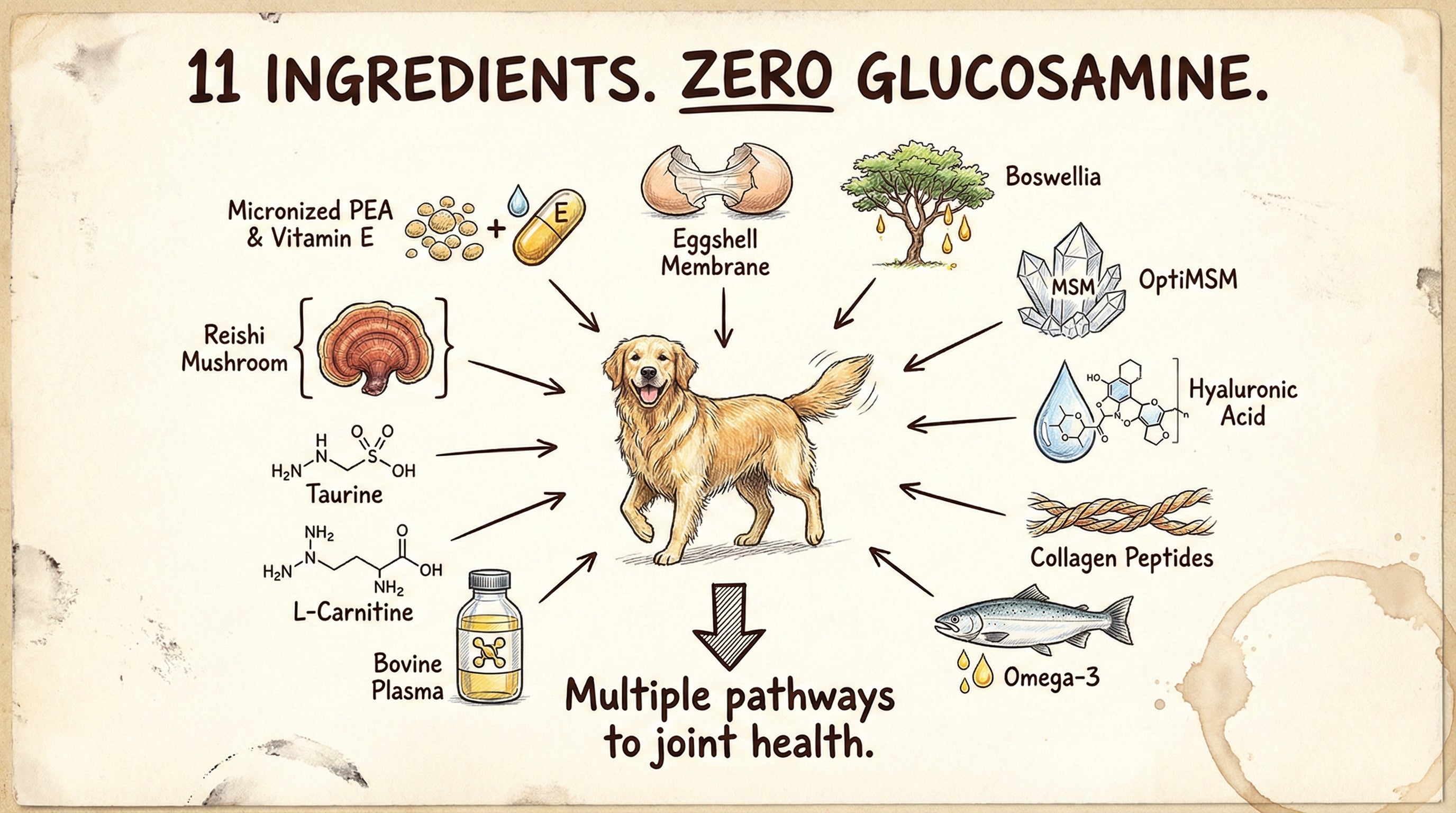
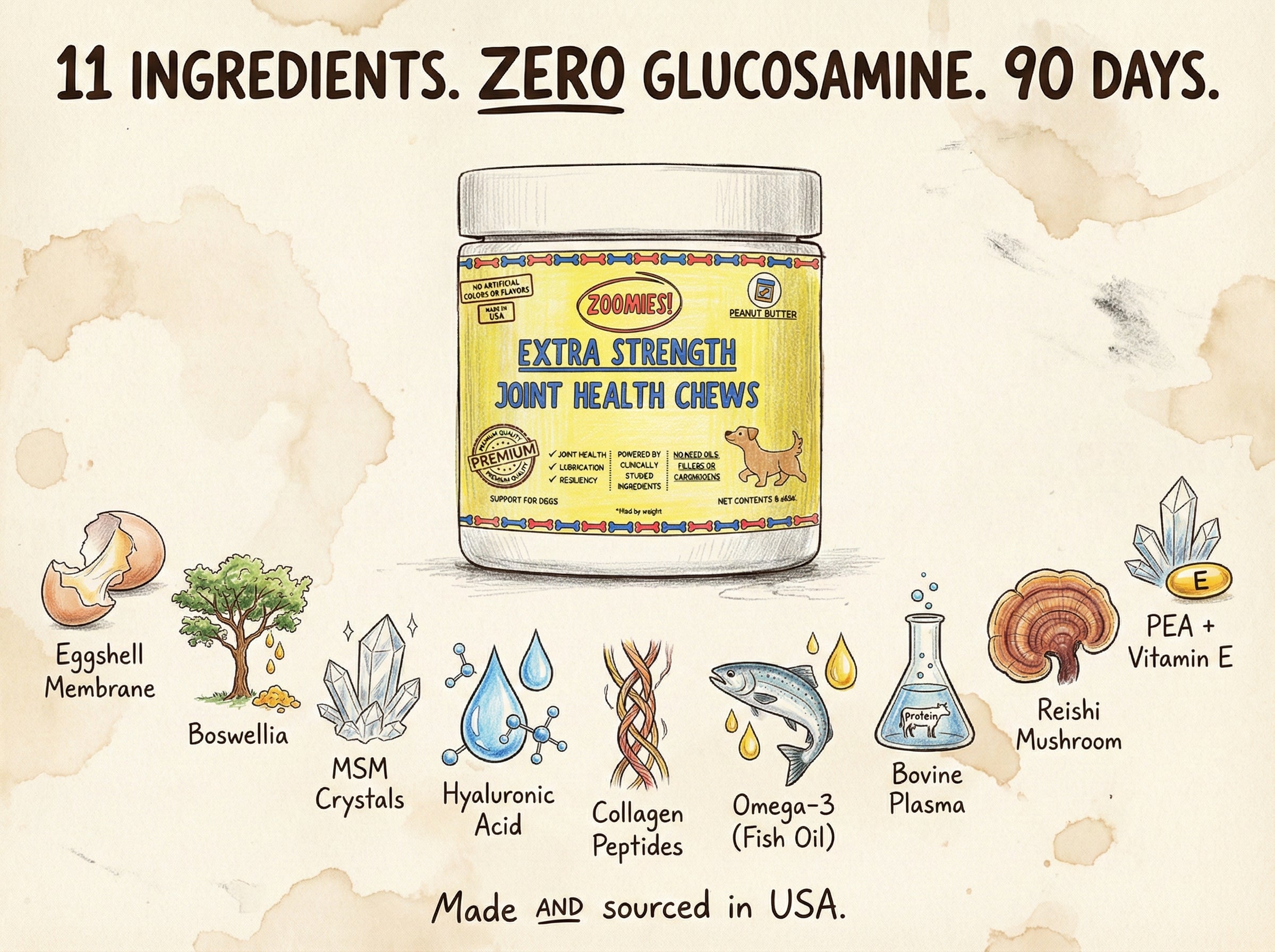
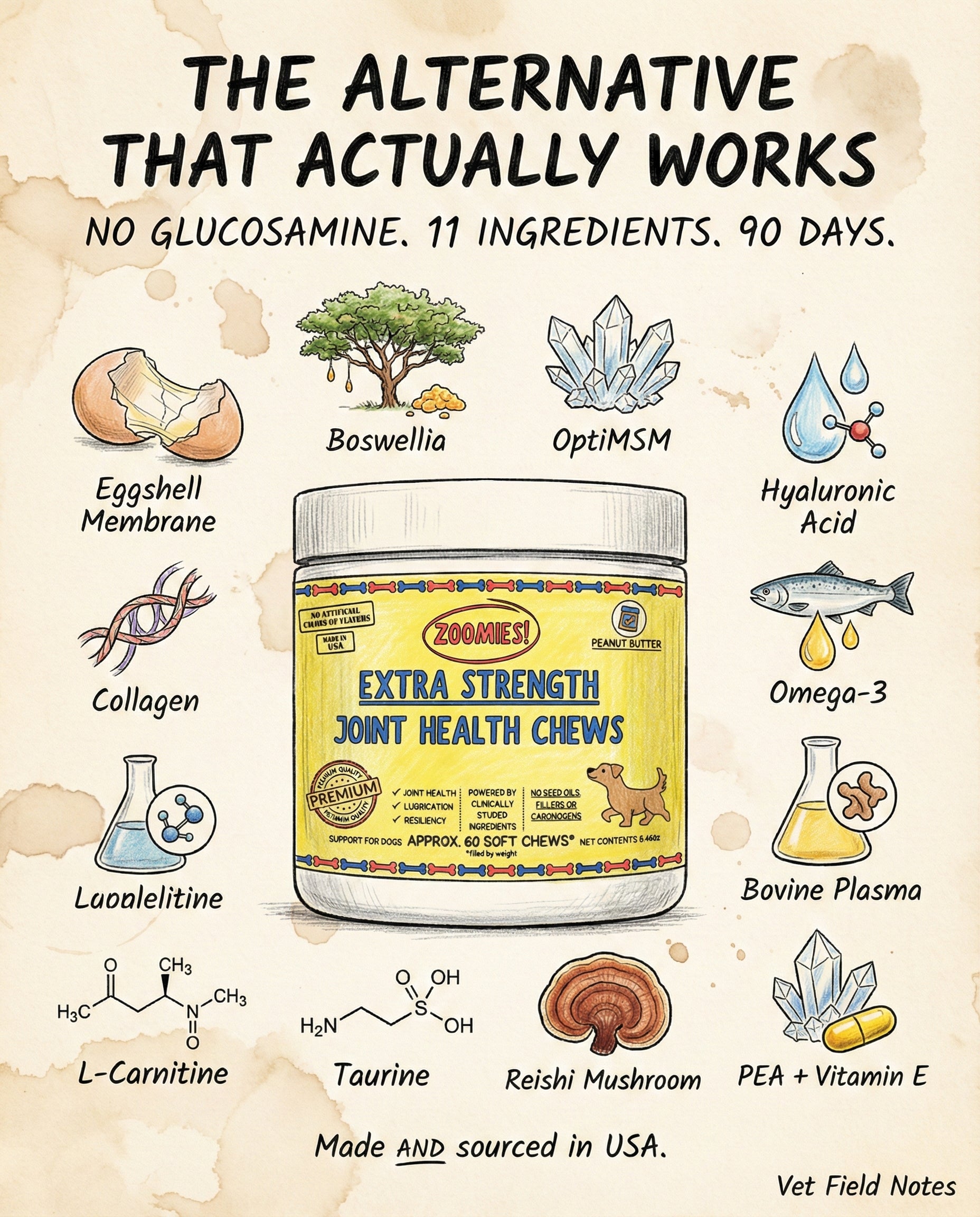
In the last decade, veterinary research has identified multiple compounds that target joint health from different angles. Not one ingredient trying to do everything. Eleven ingredients, each addressing a specific aspect of joint discomfort.
For Cartilage Support:
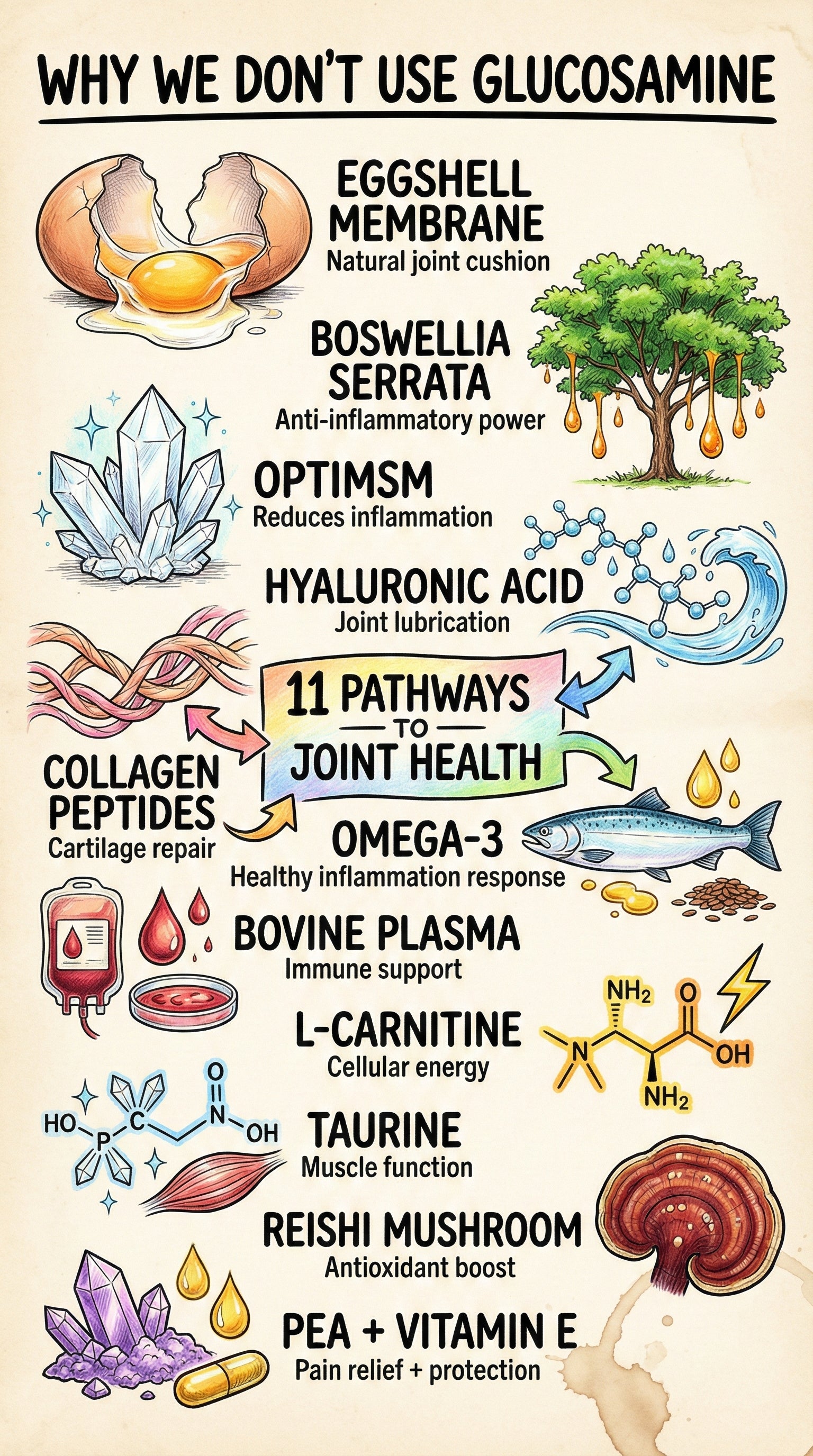
Eggshell Membrane (NEM®) contains naturally occurring glucosamine, chondroitin, collagen, and hyaluronic acid—in the exact ratios found in healthy joints. Studies show it can reduce joint pain in as little as 7-10 days.
Collagen Peptides (Type I & III) provide the amino acids cartilage cells need to rebuild. Think of it as supplying the raw materials for repair.
Bovine Plasma delivers immunoglobulins that support the body's natural response to joint stress.
For Inflammation Reduction:
Boswellia Serrata Extract has been used for centuries in traditional medicine. Modern studies confirm it inhibits inflammatory enzymes, helping calm the "fire" in your dog's joints.
OptiMSM reduces inflammatory markers and supports the structural integrity of connective tissue.
Reishi Mushroom Extract and Micronized PEA provide additional anti-inflammatory support through different pathways.
For Lubrication and Cellular Health:
Hyaluronic Acid is the body's natural joint lubricant. It helps synovial fluid maintain proper viscosity, allowing smooth movement.
Omega-3 Fatty Acids support a healthy inflammatory response throughout the body.
L-Carnitine and Taurine support cellular energy production, helping joint cells function optimally.
Vitamin E provides antioxidant protection against oxidative stress in joint tissues.
This isn't a random collection of ingredients. It's a systematic approach: target inflammation, support cartilage repair, improve lubrication, and protect cellular function.
WHAT "MADE IN USA" REALLY MEANS (AND WHY IT MATTERS)
Here's something the supplement industry doesn't advertise: "Made in USA" doesn't mean what you think.
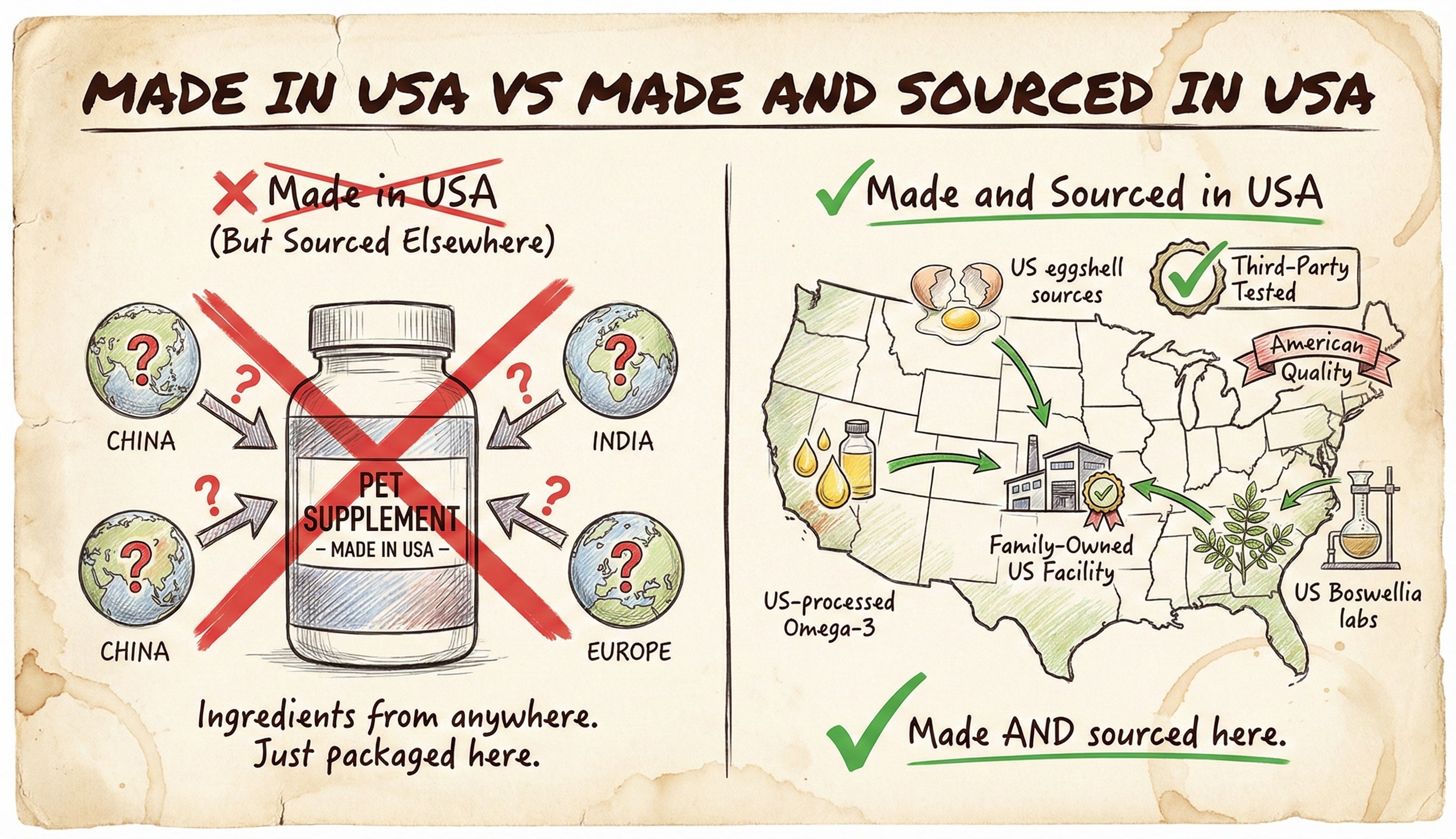
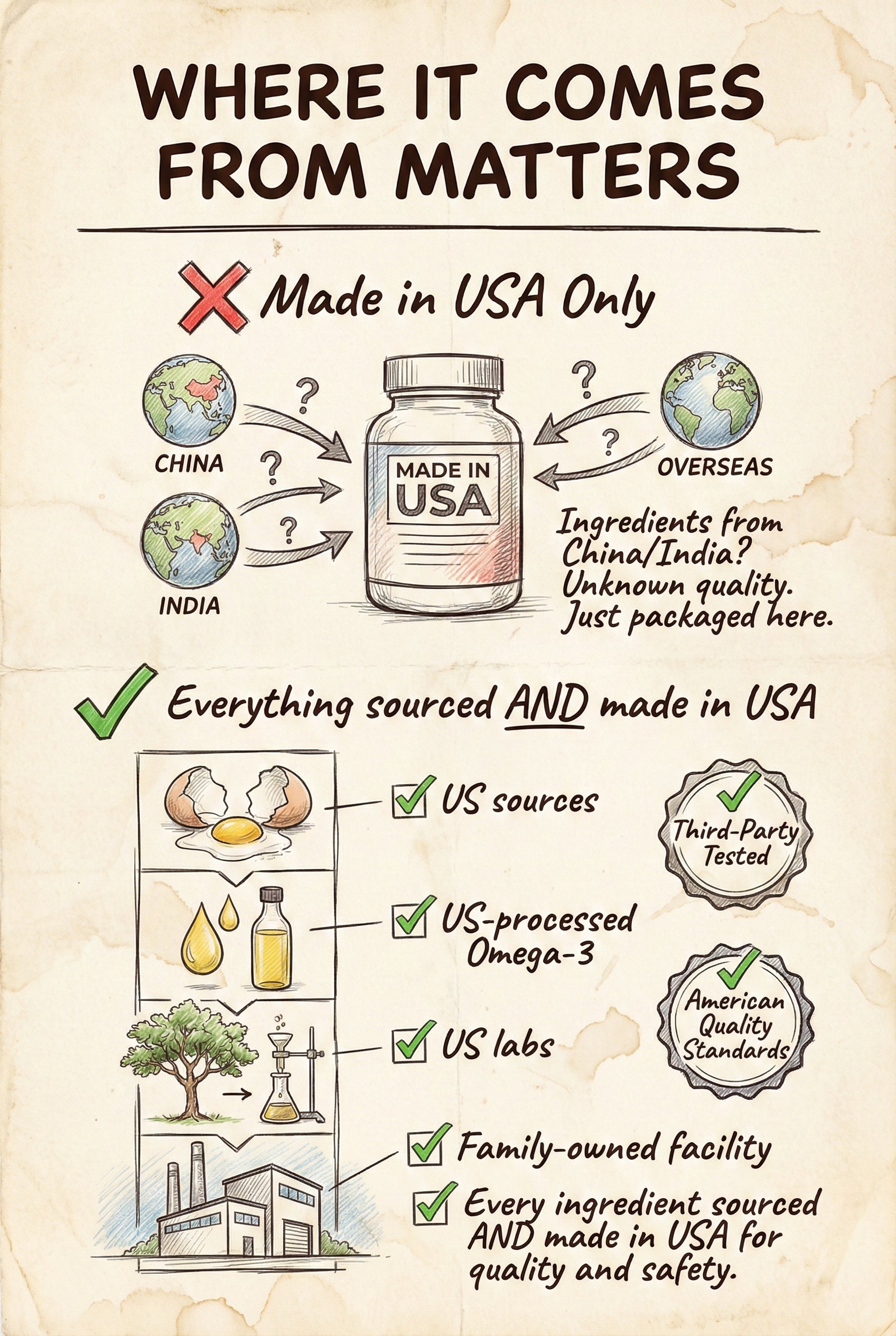
A product can be "Made in USA" if it's simply packaged here. The ingredients can come from overseas suppliers with questionable quality control. The manufacturing can happen in facilities with lower standards.
Made AND sourced in the USA means something different. Every ingredient in Zoomies comes from domestic suppliers. Every batch is manufactured in FDA-registered facilities in the United States. The eggshell membrane comes from U.S. farms. The Boswellia is processed in U.S. labs.
When you're giving something to your dog every day, that distinction matters.
If you're used to supplements that promise miracles in 24 hours, let me be straight with you: that's not how joints work.
Here's the realistic timeline based on clinical studies and customer reports:
Week 1-2: Some dogs show subtle improvements. Less morning stiffness. Easier movement getting up from bed. The ingredients are beginning to work on inflammation.
Week 3-4: Noticeable changes for most dogs. Taking stairs with more confidence. Getting in the car with less hesitation. Many owners report their dog is "acting like themselves again."
Week 6 and beyond: Clinical studies showed 51% reduction in joint discomfort and 42% improvement in mobility. More good days than bad. Play sessions lasting longer. That "puppy spark" coming back.
Not every dog responds the same way. Some show improvement in 7 days. Some need the full 4 weeks. But if your dog is in Stage 2—still eating, still wagging, still trying but struggling—you're in the window where this can help.
THE REALISTIC TIMELINE: WHAT TO ACTUALLY EXPECT
If you're used to supplements that promise miracles in 24 hours, let me be straight with you: that's not how joints work.
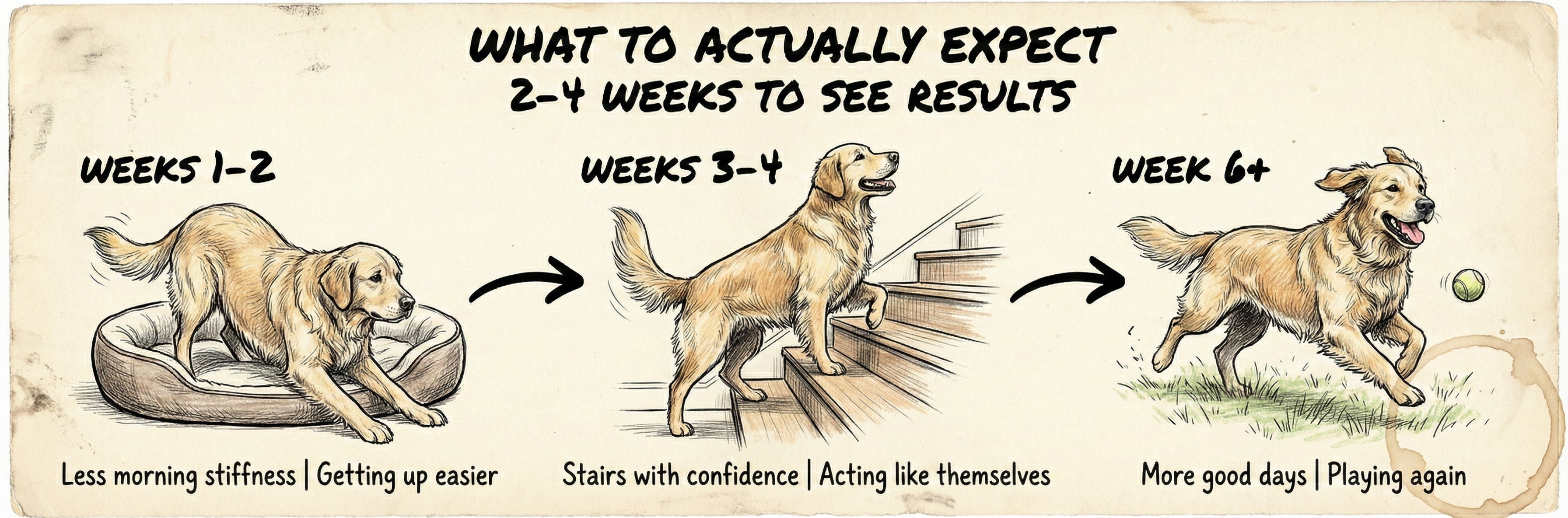
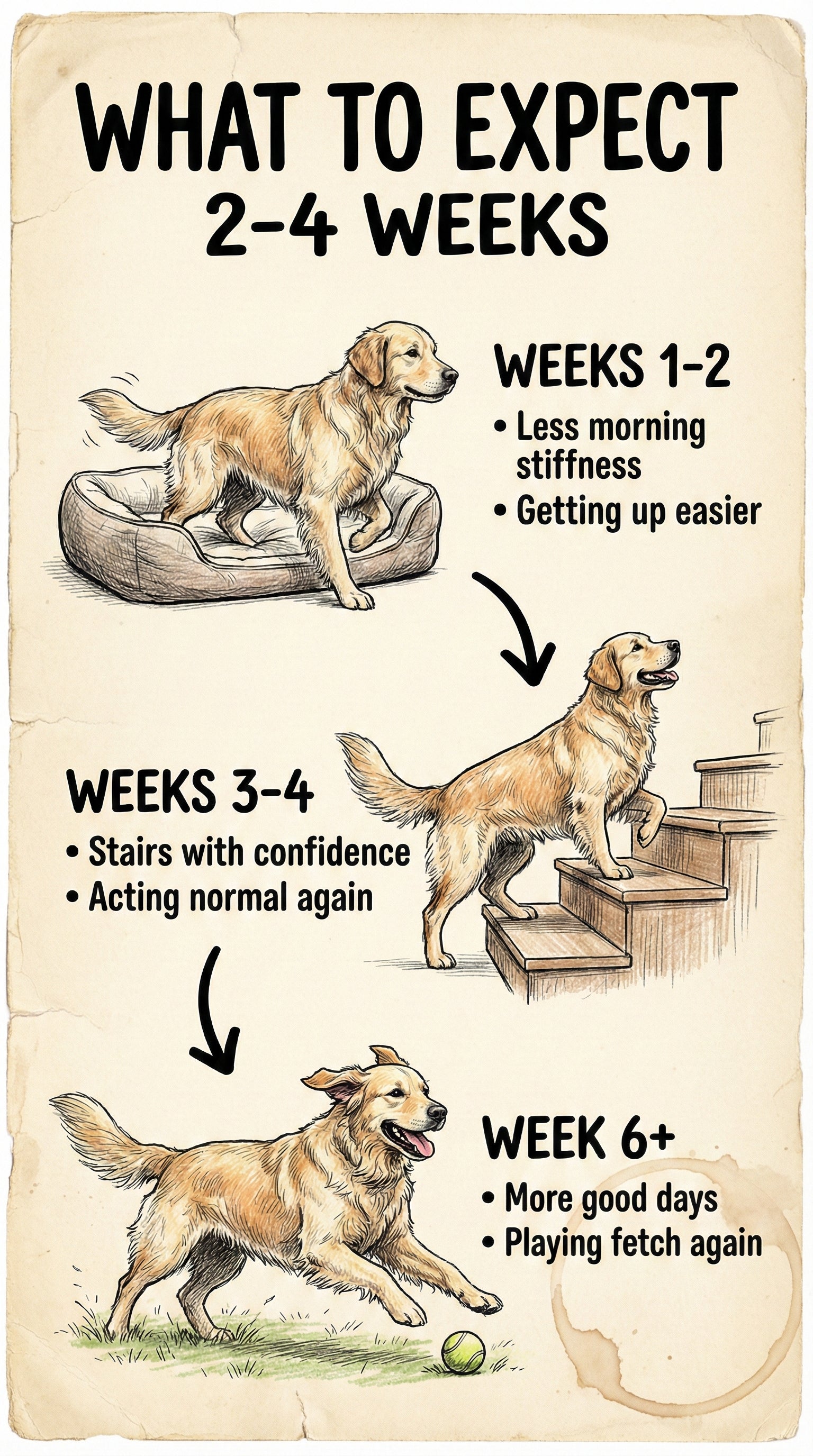
Here's the realistic timeline based on clinical studies and customer reports:
Week 1-2: Some dogs show subtle improvements. Less morning stiffness. Easier movement getting up from bed. The ingredients are beginning to work on inflammation.
Week 3-4: Noticeable changes for most dogs. Taking stairs with more confidence. Getting in the car with less hesitation. Many owners report their dog is "acting like themselves again."
Week 6 and beyond: Clinical studies showed 51% reduction in joint discomfort and 42% improvement in mobility. More good days than bad. Play sessions lasting longer. That "puppy spark" coming back.
Not every dog responds the same way. Some show improvement in 7 days. Some need the full 4 weeks. But if your dog is in Stage 2—still eating, still wagging, still trying but struggling—you're in the window where this can help.
IS YOUR DOG IN THE WINDOW? (WHO THIS ACTUALLY HELPS)
Let's be clear about who this is for and who it isn't:
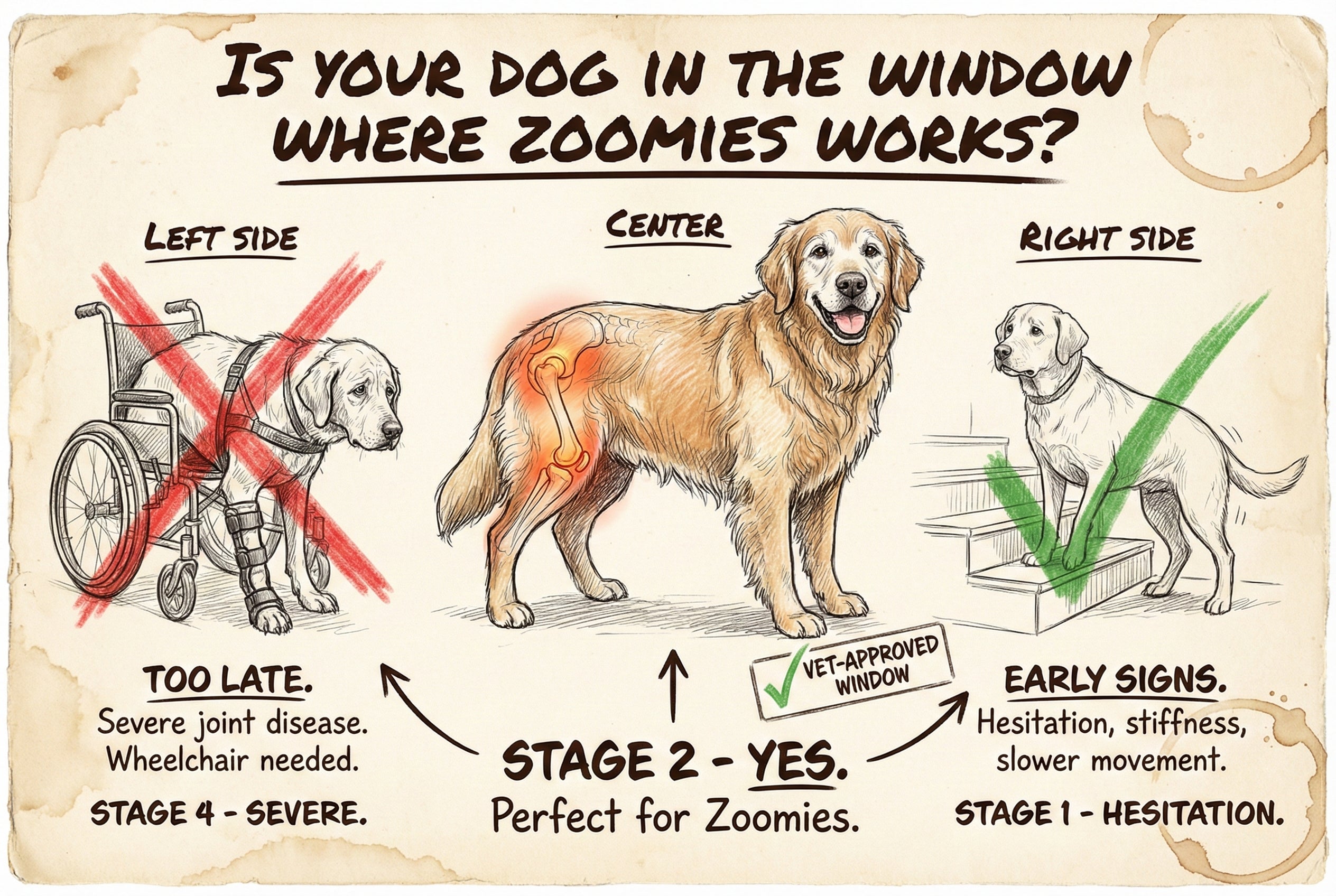
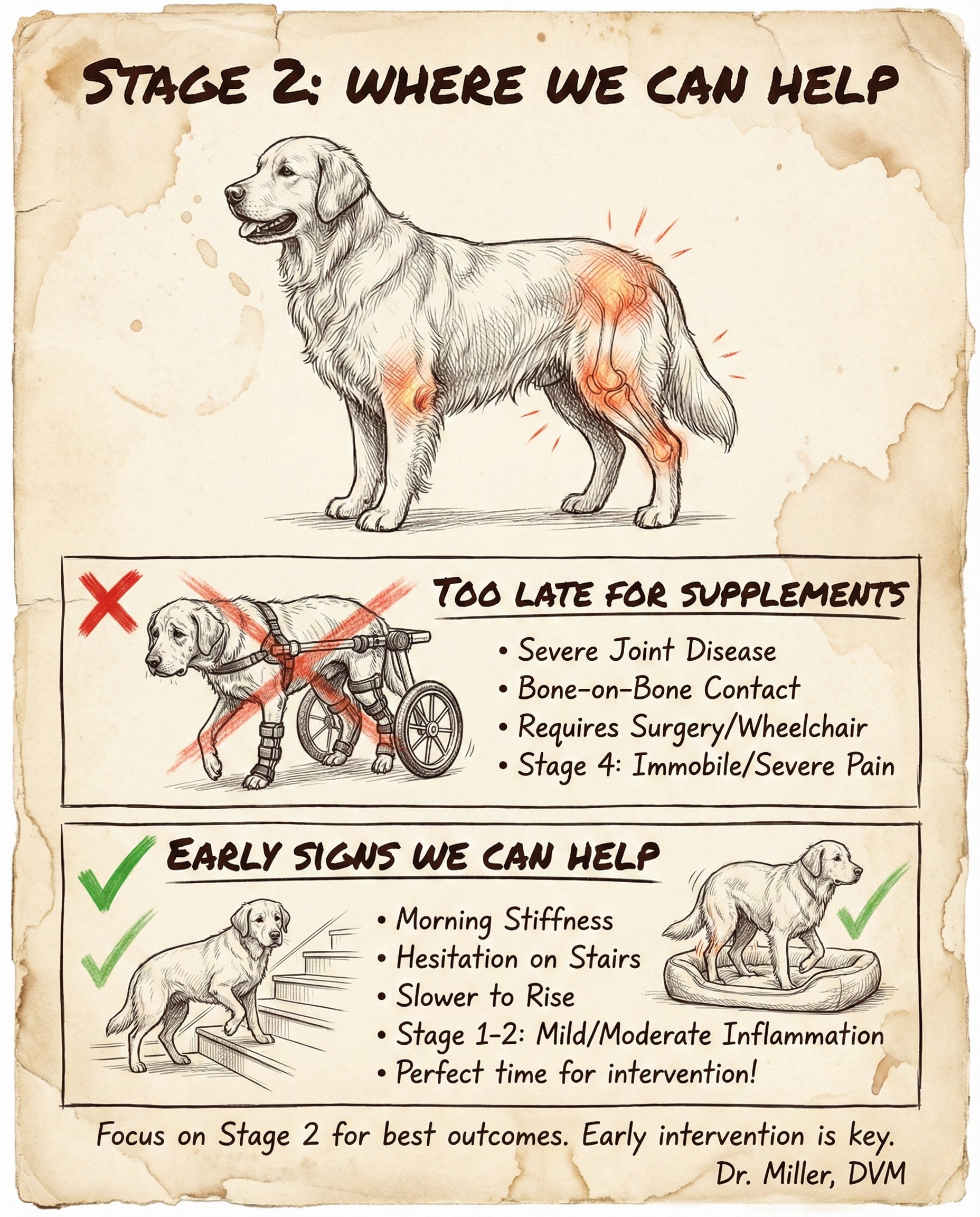
This helps dogs who are:
• 4-12 years old
• Still eating well, still wagging, still trying to play
• Showing early-to-moderate signs: stiffness, hesitation on stairs, morning groans, reluctance to jump
• Having more bad days than they used to, but not completely immobile
This does NOT help dogs who are:
• Completely unable to stand or walk
• Using a wheelchair or harness for mobility
• Suffering from nerve damage or paralysis
• In Stage 3 severe joint deterioration
If your dog is in that second group, I'm sorry—but a supplement won't help at this stage. They need veterinary intervention, possibly surgery.
But if your dog is in that first group—the "good day/bad day" group, the "hesitates at stairs but still tries" group—there's a window here. And it's closing.
THE 90-DAY PROMISE: WHY WE'RE WILLING TO GUARANTEE IT
I started this article promising you wouldn't get a sales pitch. Here's where I tell you about Zoomies—and why I'm comfortable doing it.
Zoomies is the supplement I developed after my own dog's glucosamine failure. It contains all 11 ingredients I mentioned above, in the forms and doses that actually showed results in studies. Eggshell Membrane. Boswellia. OptiMSM. The full list.
It's made and sourced entirely in the USA. No corn, wheat, soy, or artificial ingredients. Soft chews with natural peanut butter flavor that dogs actually want to eat.
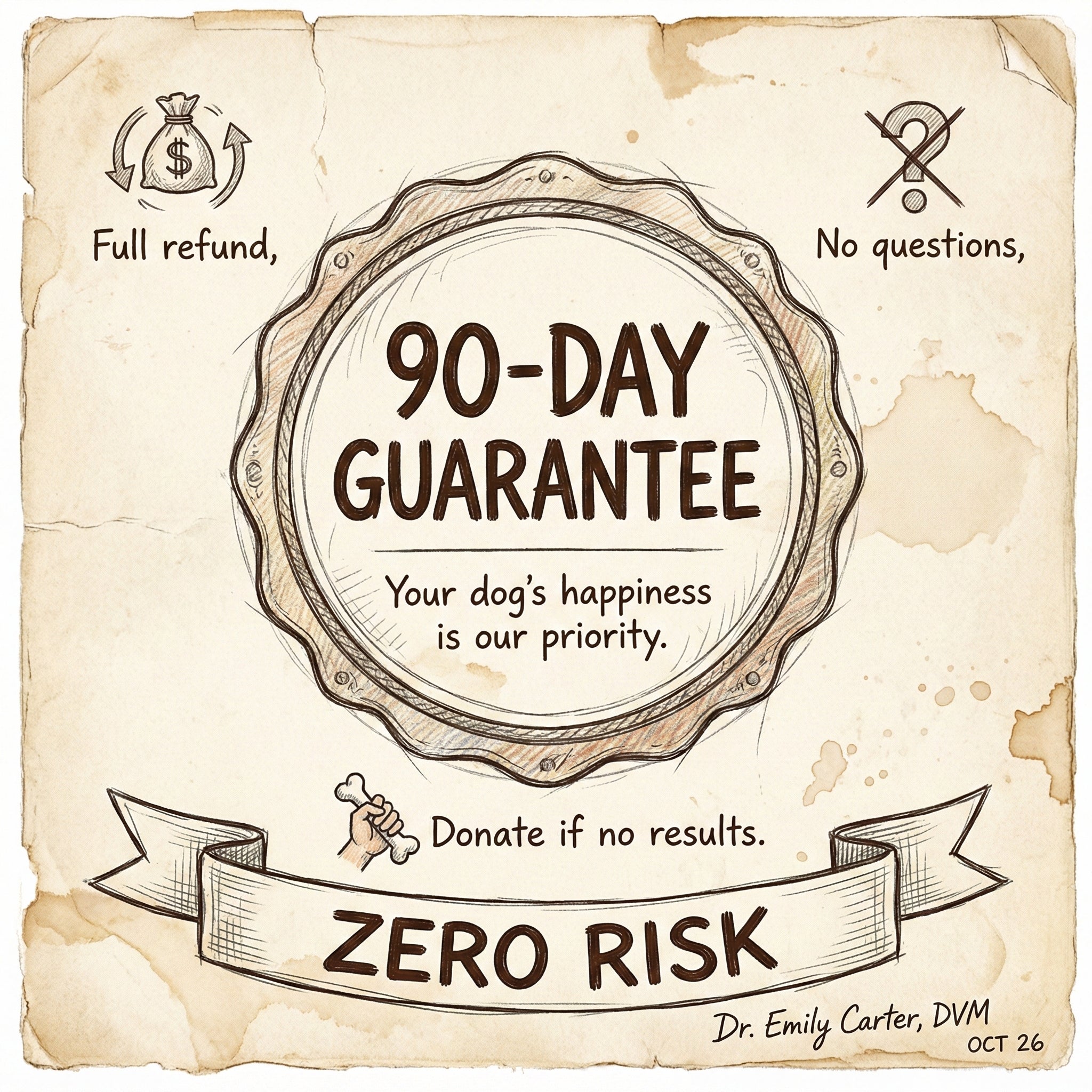
And here's the part that matters: 90-day money-back guarantee.
If you don't see a difference in your dog—if they don't have more good days than bad—you get a full refund. No questions. No need to return the product (donate it to a shelter). We just give you your money back.
That guarantee exists because we're not trying to sell to desperate people with dogs in wheelchairs. We're for Stage 2 dogs. The ones who still have that spark. The ones who deserve more good days.
UPDATE: Right now they're running a special "40% off Zoomies if you BUY IN BULK". This offer is for a limited time only, so don't wait and get yours today!
References:
1 - https://www.ncbi.nlm.nih.gov/pmc/articles/PMC8385315/
2 - https://www.hsph.harvard.edu/nutritionsource/magnesium/
3 - https://www.healthaid.co.uk/blogs/news/magnesium-most-important-minerals
4. https://www.avogel.co.uk/health/circulation/is-magnesium-good-for-circulation/
5. https://www.ncbi.nlm.nih.gov/pmc/articles/PMC6570791/
6. https://pubmed.ncbi.nlm.nih.gov/37486715/
7. https://pubmed.ncbi.nlm.nih.gov/37486715/
This is an advertisement and not an actual news article, blog, or consumer protection update.
*These statements have not been evaluated by the Food and Drug Administration. This product is not intended to diagnose, treat, cure, or prevent any disease.
The story depicted on this site and the person depicted in the story are not actual news. Rather, this story is based on the results that some people who have used these products have achieved. The results portrayed in the story and in the comments are illustrative, and may not be the results that you achieve with these products. This page could receive compensation for clicks on or purchase of products featured on this site. These products are not intended to diagnose, treat, cure or prevent any disease.
Contact Us Privacy Policy Terms Of Service
© 2025 All Rights Reserved




© 2025, Zoomies Pet Health